
Request for Proposal of
Frame optimization of nacelle of
electric engine
The information in this document is proprietary information of KARI and is disclosed in confidence.
The technical data is the property of KARI and shall not be used, disclosed to others or reproduced
without the express written consent of KARI, including, but without limitation, it is not to be used in
the creation, manufacture, development, or derivation of any repairs, modifications, spare parts,
designs, or configuration changes. If consent is given for reproduction in whole or in part, this notice
and the notice set forth on each page of this document shall appear in any such reproduction in whole
or in part.
2026. 9.

RFP of Frame optimization of nacelle of electric engine
2
Table of Contents
Conditions for modification and cancellation of SOW................................................4
Topology optimization of lightweight electric-engine nacelle.....................................7
Technical Evaluation Sheets

RFP of Frame optimization of nacelle of electric engine
3
1
General Information
1.1
Project Information
The Hybrid Electric Propulsion (HEP) system development project, launched in
2026, is a government-funded R&D initiative led by the Korea Aerospace Research
Institute (KARI) to develop distributive propulsion system technology for super
electric Short Take-Off and Landing (eSTOL) aircraft. The HEP system uses an
electric powertrain system to create a high performance and high efficiency
propulsion unit. These units consist of a turboshaft, a generator, a rectifier, battery
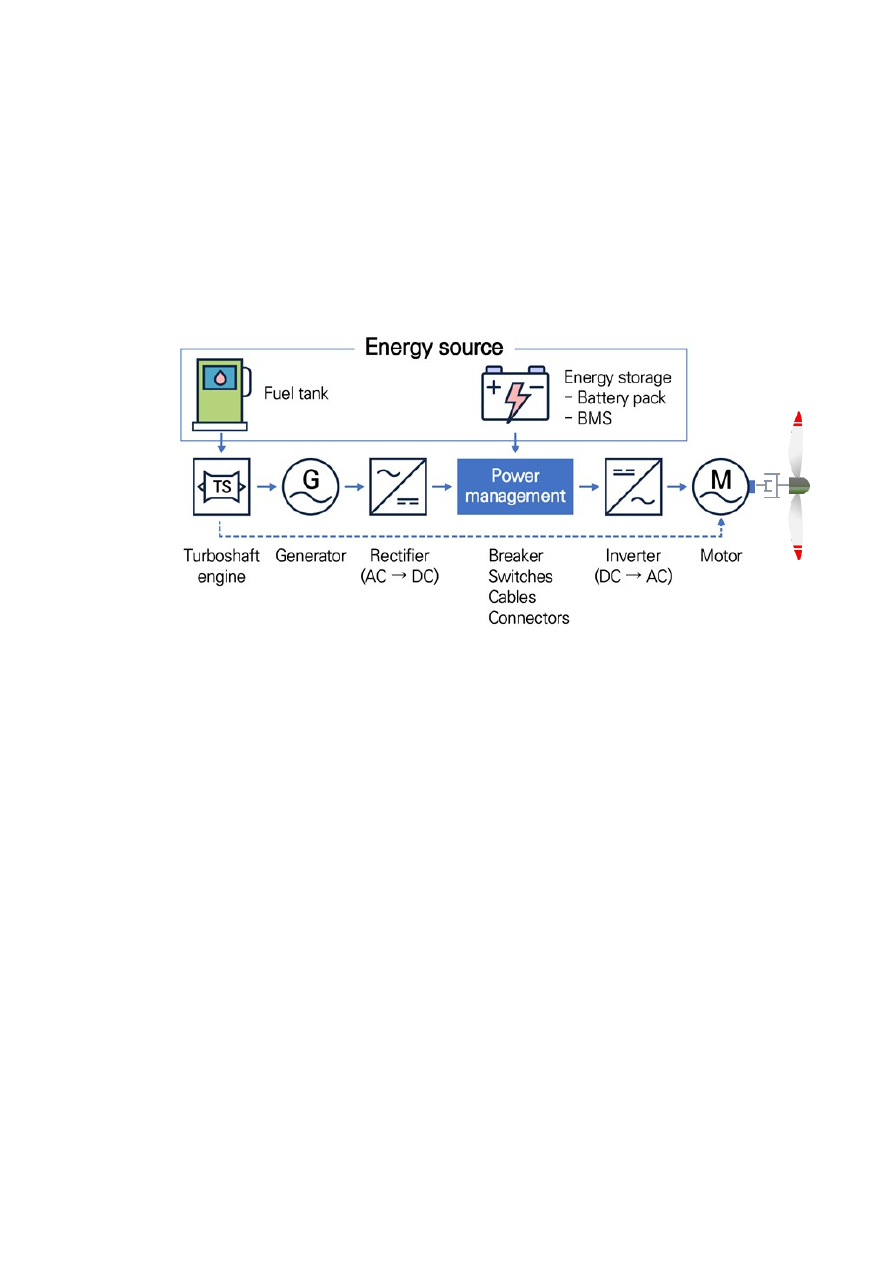
packs, electric motors, inverters, and heat exchangers, see Fig. 1. The integration of
these systems within the aircraft requires careful consideration of system-level
weight, installation space, structural interfaces, thermal management, and
operational requirements.
One of key elements of the HEP system is the nacelle, which serves as the
installation platform for the electric engine unit and its associated supporting
systems. Unlike a conventional nacelle that primarily provides an aerodynamic
enclosure and structural support for the propulsion system; an electric-engine nacelle
must accommodate propulsion, power-electronic, thermal-management, and
associated interface requirements within a compact installation envelope. Major
nacelle-resident components, including the electric motor, inverter, propeller pitch-
control hardware, heat exchanger, and cooling pump, need to be arranged such that
individual component and combined system requirements are satisfied
This project will perform a preliminary structural frame design of the nacelle using
the integrated Multi-Material Topology Optimization and DfAM (Design for
Additive Manufacturing) for the light-weight design.
1.2
Schedule and process
1.2.1 Schedule and location
Table 1 Schedule
Time
Event
Within one week after
contract
KARI provide document for nacelle design for
an electric engine
October, 2026
Kick off meeting
November, 2026
Interim presentation
One week before final
meeting
Submission of final report
Early December, 2026
Final presentation

RFP of Frame optimization of nacelle of electric engine
4
18st Dec., 2026
Contract expiration
Table 2 Payment Schedule
Event
Payment (%)
After kick-off meeting
50%
After the final report
50%
1.2.1.1 Kick off meeting shall be performed at the contractor site but it can be changed (exact date will
be determined later)
Final meeting shall be held at the KARI. (exact date and location will be fixed later)
1.2.2 Selection process and schedule
1.2.2.1 Selection process
1.2.2.2 Inquiries related with a proposal preparation may be asked or sent by mail to the following
persons.
Jae Sung Huh, Ph.D.
Aeropropulsion Research Division
Korea Aerospace Research Institute
169-84 Gwahak-ro, Yuseong-Gu, Daejeon, Korea
jshuh@kari.re.kr
Tel) 82-42-860-2831 / Fax) 82-42-860-2626
1.3
Conditions for modification and cancellation of SOW
1.3.1 KARI reserves the right to change or modify the SOW if there is any change in the technical and
business requirements of the SOW even after SOW issuance. Upon the incurred changes or
modification of the SOW as above, the contractor shall submit the modified proposal in
accordance with the specific instructions provided by KARI.
1.3.2 KARI reserves the right to withdraw this SOW at any time with a written notice to the
contractor, in case of the proposal provided by the contactor does not meet the requirements of
the SOW.
1.4
Preparation of the proposal
1.4.1 Proposal shall be prepared in English.

RFP of Frame optimization of nacelle of electric engine
5
1.4.2 The basic unit shall be SI unit. British unit of power and weight could be used as a
complementary unit. SI unit comes first and British unit shall be put in parentheses.
1.4.3 In order to substantiate a proposal, all relevant data shall be submitted as attachments. The
proposal which is improvable or based on vague presumptions shall be excluded.
1.4.4 All electronic files including documentary evidences shall be prepared with MS-WORD and
submitted by e-mail the address stated in Article 1.2.2.2.
1.4.5 Time and date in the SOW are specified by the Korean Standard Time (GMT+09:00) and Date.
1.4.6 The proposal and relevant documents provided by contractor will not be returned.
1.5
Notes for the preparation of Proposal
1.5.1 This proposal constitutes a firm and irrevocable offer. All prices shall remain valid until the
final contract.
1.5.2 The contractor shall be responsible for all costs and expenses in preparation of its proposal and
clarification with KARI.
1.6
Authority of KARI
1.6.1 KARI reserves the right to reject proposals that are unrealistic or unreliable. KARI will not
disclose the result of proposal evaluation.
1.7
Maintenance of Secrecy
1.7.1 The contractor shall not disclose any part of this SOW without prior permission of KARI.
1.7.2 The contract may not, in any manner, advertise or publish any matter in relation to the
contractor’s proposal.
RFP of Frame optimization of nacelle of electric engine
6
2
Introduction
2.1
Conceptual design of a hybrid propulsion system
A schematic design of a series hybrid propulsion system is shown in Fig. 1. In general, the
system features several propellers, and each propeller connects to an electric motor and an
inverter which are installed in a nacelle as shown in Fig. 2.
Figure 1. Schematic of HEP system
For the proposed eSTOL application, the electric engine and the related components such as
heat exchanger and cooling pump must be contained within a compact nacelle. The nacelle
must not only provide adequate space for all components (in a small volume) but also account
for their structural and thermal mounting requirements.
2.2
Electric Engine
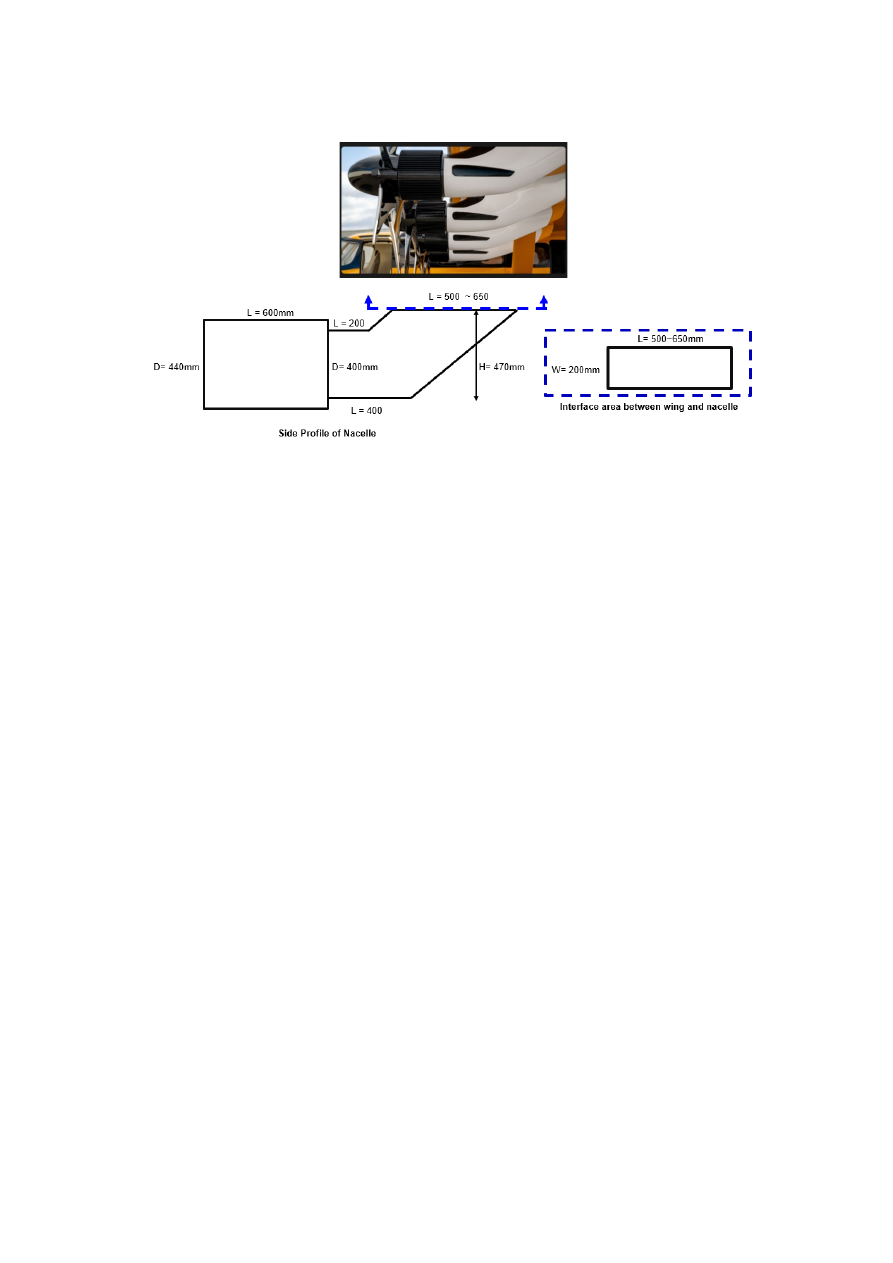
The electric propulsion unit and its supporting systems are integrated within an engine nacelle,
as illustrated in Fig. 2. In addition to providing an aerodynamic enclosure, the nacelle
accommodates major propulsion, electrical, and thermal-management components, including
the electric motor, inverter, propeller pitch-control hardware, heat exchanger, and cooling
pump. These components must be integrated within a compact and lightweight envelope while
maintaining adequate installation space, accessibility, connections, and structural interfaces.
RFP of Frame optimization of nacelle of electric engine
7
a)
b)
Figure 2. (a) Example of electric engine nacelles (Electra Aero EL9).
(b) The design space available for the eSTOL HEP nacelle.
3
Scope of work
3.1
General Description
The goal of this project is to establish a structural frame design for an electric-engine nacelle
based on KARI’s requirements using effective MM-MJ-TO and DfAM in-house codes. The work
shall develop initial structural supports within the available nacelle envelope. The initial frame
design will consider geometric compatibility, installation and accessibility requirements, mass
distribution, thermal-management requirements, and space for electrical and coolant
connections. The MM-MJ-TO design will provide a basis for further structural and aerodynamic
development later in the project.
3.2
Topology optimization of lightweight electric-engine nacelle
3.2.1 KARI shall provide the available design space for a nacelle and relevant information on the major
internal components, including their dimensions, mass, thermal characteristics, installation
requirements, structural interfaces, and other design information necessary for the proposed work.
Based on the information provided by KARI, the contractor shall propose initial feasible
locations and orientations of the major internal components within the available nacelle envelope.
The candidate arrangements shall also be used to distinguish the regions occupied or restricted by
the installed components from the remaining space available for subsequent structural
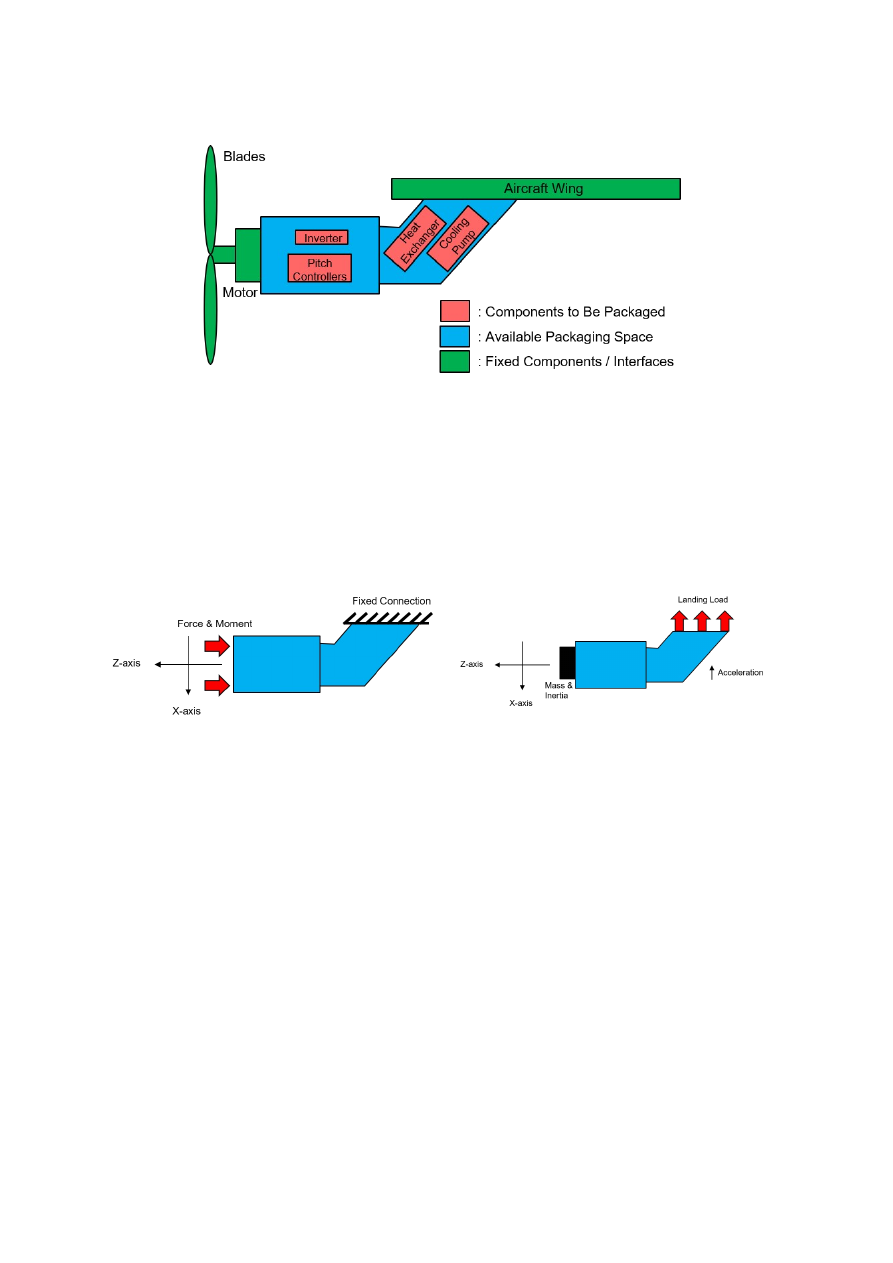
development. An example illustrating the geometric definition of occupied and available regions
within a structural envelope is shown in Fig. 3.
RFP of Frame optimization of nacelle of electric engine
8
Fig. 3. Schematic of the preliminary nacelle configuration
and component classification
3.2.2 The contractor shall use their own in-house MM-MJ-TO code with DfAM code as needed with
the relevant structural interfaces (as identified by the available propulsion-system information
provided by KARI) to generate initial structural frame designs. Representative loading
information, such as the forces and moments associated with the propeller system and
maneuver loading illustrated in Fig. 4, will be utilized to shape the structure topology.
Propeller Loading
Landing Inertia Relief Load Case
Fig. 4. Representative propulsion and landing induced loading conditions
3.2.3 The contractor shall document the preliminary structural design of the frame with associated
geometric and interface information. The resulting design shall provide a basis for future
structural design refinements and further aerodynamic nacelle development.
3.3
Kick-Off and Final Meeting
3.3.1 The contractor shall prepare for and participate in the kick-off and final meetings.
3.3.2 Presentation and supporting materials used during the kick-off and final meetings shall be
provided to KARI in electronic file format for project documentation.
3.3.3 If sensitive or restricted information is included, it shall be removed before the materials are
provided to KARI.

RFP of Frame optimization of nacelle of electric engine
9
4
Other requirements
4.1
Meeting room for kick-off and final meetings
4.1.1 A meeting room shall be prepared by contractor for kick-off meeting at contractor’s location
4.1.2 The meeting room shall be equipped with free WIFI.
5
Proposal Requirement
5.1
Contents of Proposal requirements
5.1.1 Proposal summary
5.1.2 Consultants
5.1.2.1 Consulting team summary
5.1.2.2 Consultants experiences
5.1.3 Proposal
5.1.3.1 Scope of work for key topics
5.1.3.2 A monthly base plan
5.2
Price proposal
5.2.1 Estimated Budget: KRW 30,000,000
5.2.2 Price shall be proposed in Korean WON (Y2026).
5.2.3 Contractor shall include all cost items to cover the all activities in their proposals and itemize
requested items.
5.2.4 The proposed price shall reflect possible fluctuations in labor costs, material prices and others
in the proposed price. Therefore, the contractor shall not demand to reflect the fluctuation in
cost due to cost items not stated in the contractor's proposal in the future.
※ The price proposal shall be submitted as one (1) original proposal, sealed separately. The
document submitted without the price proposal shall not contain any price information.
6
Terms and Conditions
6.1
General terms and conditions

RFP of Frame optimization of nacelle of electric engine
10
6.1.1 Shall follow KARI’s terms and conditions
6.2
Intellectual property
6.2.1 All results produced shall be jointly owned by KARI and the contractor.
Technical Evaluation Sheets
Evaluation Item
Evaluation Criteria
Weight
(%)
Score
Understanding of
SOW
Understanding of the objectives of the electric
engine nacelle frame optimization and the specific
characteristics of the Hybrid Electric Propulsion
(HEP) system.
10
Technical
Approach &
Methodology
Appropriateness and specificity of the proposed
lightweight design methodology utilizing MM-
MJ-TO and DfAM.
30
Design
Integration &
Analysis Plan
Adequacy of the plan for optimizing the layout of
internal components (motor, inverter, heat
exchanger, etc.) and incorporating structural and
thermal requirements.
20
Project Schedule
& Management
Realism of the proposed schedule and the
adequacy of the process management plan leading
up to the final report submission.
10
Relevant Project
Experience
Proven track record in aircraft nacelle/airframe
structural design or high-level topology
optimization projects.
20
Qualifications of
Personnel
Professionalism, academic background, and
relevant expertise of the key engineers and
researchers assigned to the project.
10
Total
100
